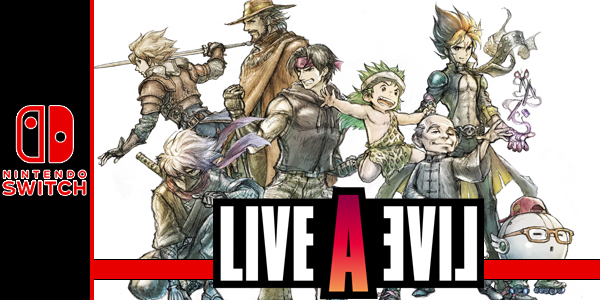
It’s time to play “finally play one of those games that’s been on your backlog for ages”! Yes, Live A Live’s HD2D remake has been on my list for a while, though I only actually finally brought it at the end of last year. The game is essentially a short story collection but instead of prose its short JRPGs spread across different eras of time, from prehistory to the far future, all culminating in a final chapter involving all the protagonists joining forces. Due to this I thought it would be a fun thing to dip in and out of and I was right, though it might be too easy for its own good…
Background:
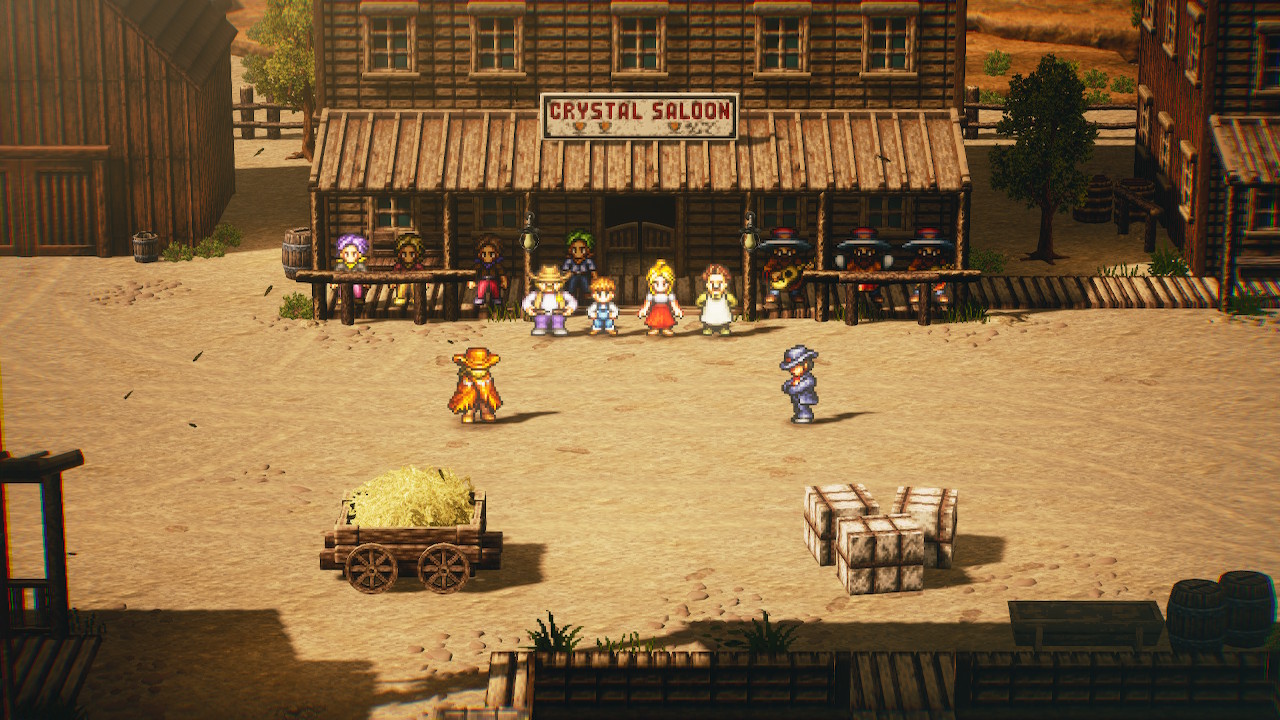
I THINK this screenshot if from the Wild West part of the game… I THINK.
The original Live A Live (that’s Live as in “Live TV” twice with an “A” in the middle. No I don’t know why…) was released on September 2nd 1994 in Japan and was never translated and brought to English speaking audiences at all, leaving unofficial fan translations once ROMs became a thing as the only way to experience it, at least until the remake. That being said if nothing else the game’s soundtrack, an early example from all-time great Yoko Shimomura, spread west over the past decade or two, as anyone who played Undertale would tell you…
The HD2D remake was released on Switch worldwide on July 22nd 2022 and then later got ported over to the PS4, PS5 and Steam on April 27th 2023. Brand new crisp graphics, not just an English script but English voice acting, a whole new remixed soundtrack from Shimomura… to say this came out of nowhere would be an understatement, especially to us English speaking markets. Happy it did though!
Gameplay:
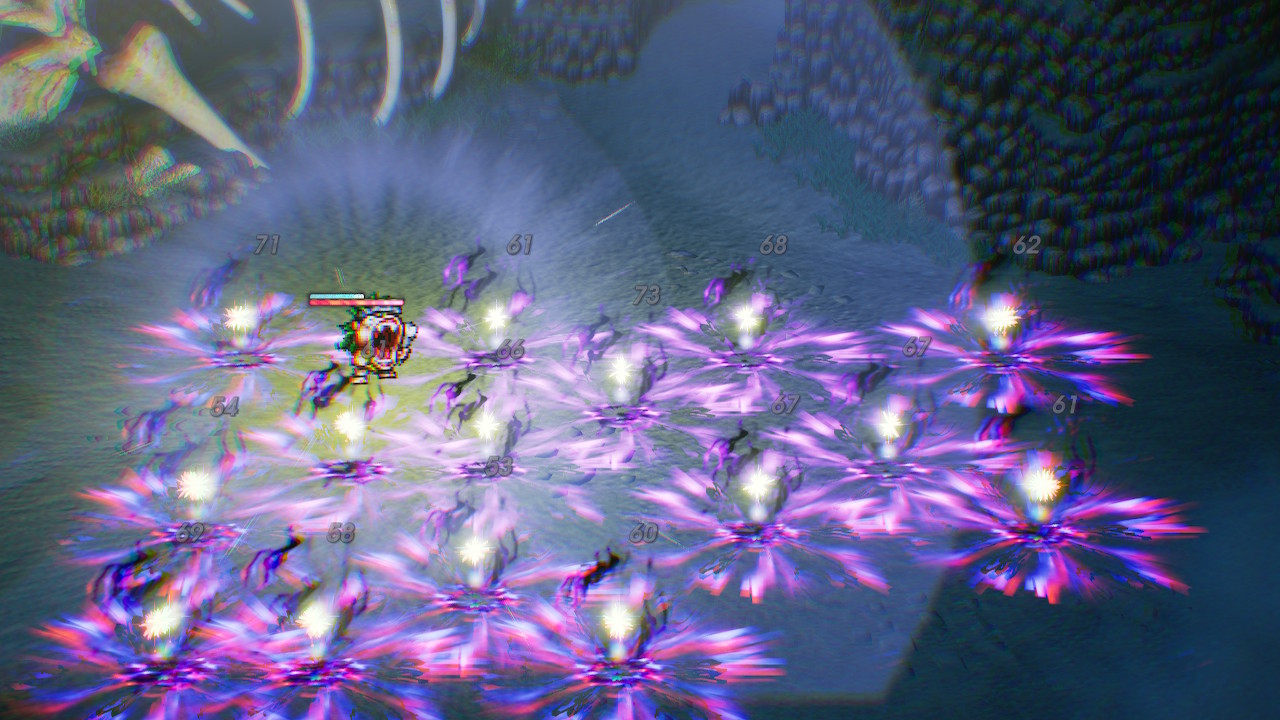
Pogo takes out a whole bunch of enemies with a very loud shout. Those cavemen were just built differently!
The gameplay of Live A Live is a traditional turn based RPG with a twist (which I guess means it’s not a traditional one… ah, you know what I mean!) so you and your opponents have your own time you can “take your turn” in and the others can’t move when you make yours, the major difference here is that the action takes place on a 7×7 grid and you can freely move your character around the grid but each move counts as time passing for your opponents, so while you might want to get in closer because the attack you want to do is close-range moving three squares might give your opponent a chance to do an attack before you (moving doesn’t count as you using your turn, but does still move time) It’s a fun system, but as mentioned the rest of the system makes things rather easy. The biggest thing I found was that when you exit a battle, either by winning or fleeing, all your party are at full health for the next battle, so if I have a party of three and two are K.O’d and the last person has only a slither of health left I didn’t need to worry about making it to a save point or using healing magic / potions to restore my party’s health because the next random encounter everyone was fine.
That all being said with the exception of a few boss characters catching me unaware with a super-powerful attack I never died in the game as not only does your health refill in between encounters but there isn’t any limit on what attacks you can use and how often, with the exception of some more powerful ones taking a little time to charge up. Add in the fact you can see what types of moves enemies are weak to or resistant against right at the start of every encounter and you can see why the game didn’t really provide much in the way of a challenge. I mean, that was fine by me, this was something fun to dip in and out of, not having to worry about item management or replaying large sections due to dying before a save point was fine by me, but it does need to be pointed out. Some moves transform one or more of the tiles to have negative effects, like turning them hot so anyone or anything on the tile will take burn damage if they stay on it, that sort of thing. Apart from all that it’s your classic physical moves, elemental attacks, items (both curative and offensive) and you level up with experience points every time you win a battle. Throw in overworlds to travel around, NPCs to talk to and equipable items that you can loot to increase your stats and you have yourself a classic JRPG but with a spin on combat and story presentation.
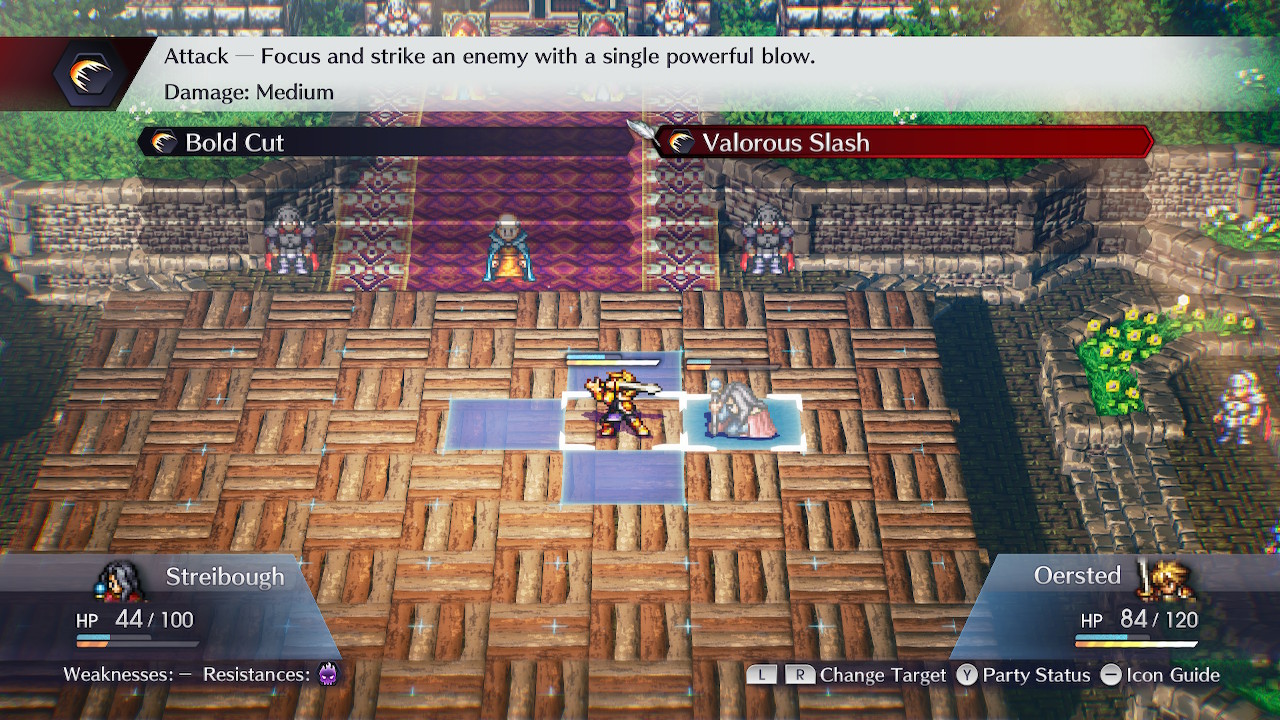
Pretty much everything I said about how the combat works in one screenshot. Nice going me!
That all being said each of the different eras have little changes to the systems: Prehistory has no verbal dialogue and the random encounters can be dodged as you can “sniff” scents and see where enemy (and pick up-able items) are represented by floating clouds of dust; Imperial China has you train three students with the most powerful one ending up the protagonist rep for this era in the final chapter; Edo era Japan has enemies visible on screen that are able to be avoided via a stealth system and in fact a reward awaits if you don’t kill anyone before the final boss; the Wild West scenario has pretty much just the one battle and the rest of the chapter is preparing for the battle by setting up traps and getting supplies; Present Day plays like a Street Fighter II parody complete with the protagonist fighting a selection of fighters from around the world via a character select screen, though with the unique system that he learns the moves he gets hit by; the Near Future era has you use psychic powers to read the minds of NPCs to get information and later includes giant mech battles; and the Far Future has you play as a silent robot and with the exception of the final boss it involves no combat whatsoever.
Completing all those scenarios unlocks the Middle Ages scenario, which is your classic random-encounter-filled quest across a fantasy land to slay the Lord of Dark who has captured a Princess, though its ending is very much un-classic, which I’ll get to in the spoilery story thoughts. Completing the Middle Ages chapter then unlocks the final chapter that as mentioned unites all the protagonists together and sees you pick one protagonist and then recruit all the others and even get their strongest weapons by completing various dungeons before confronting the final boss. It’s a really fun set up honestly, though I don’t know how well it would work if you played it for hours several days in a row, like I normally do for a new major game, but as something stress-free to dip into it worked great.
Graphics and Sound:
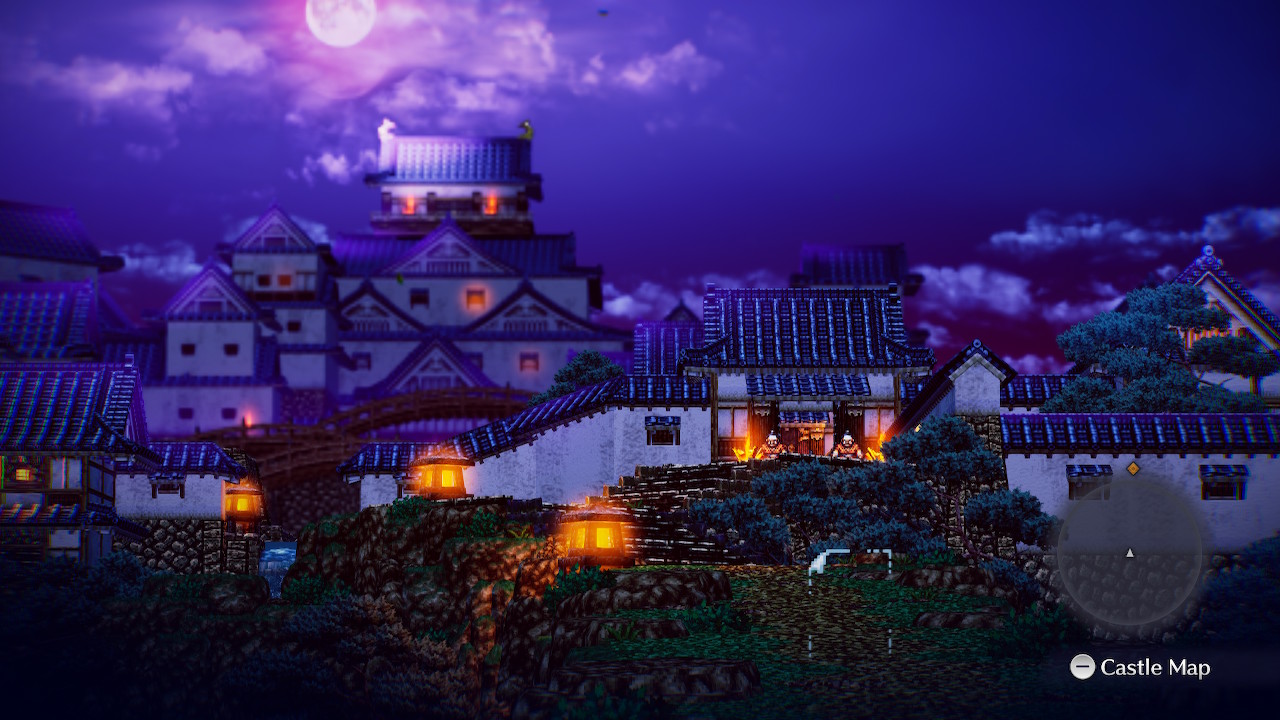
Oboromaru hides behind a stealth sheet… thingy to give up a nice look at the HD2D graphics.
The graphics are a great example of the new-ish “HD2D” visual style, where you have detailed traditional 2D sprites on a 3D map with modern lighting engines. It’s really pleasing on the eyes, especially in darker areas that are lit up.
Sound is unsurprisingly outstanding. Well, the OST anyway, the English voice acting is spotty, some are good, some are… not so much. Still though, the music is excellent and I’m happy to say all-time classic boss music “Megalomania” has been remixed superbly, making each boss battle feel really exciting.
Story:
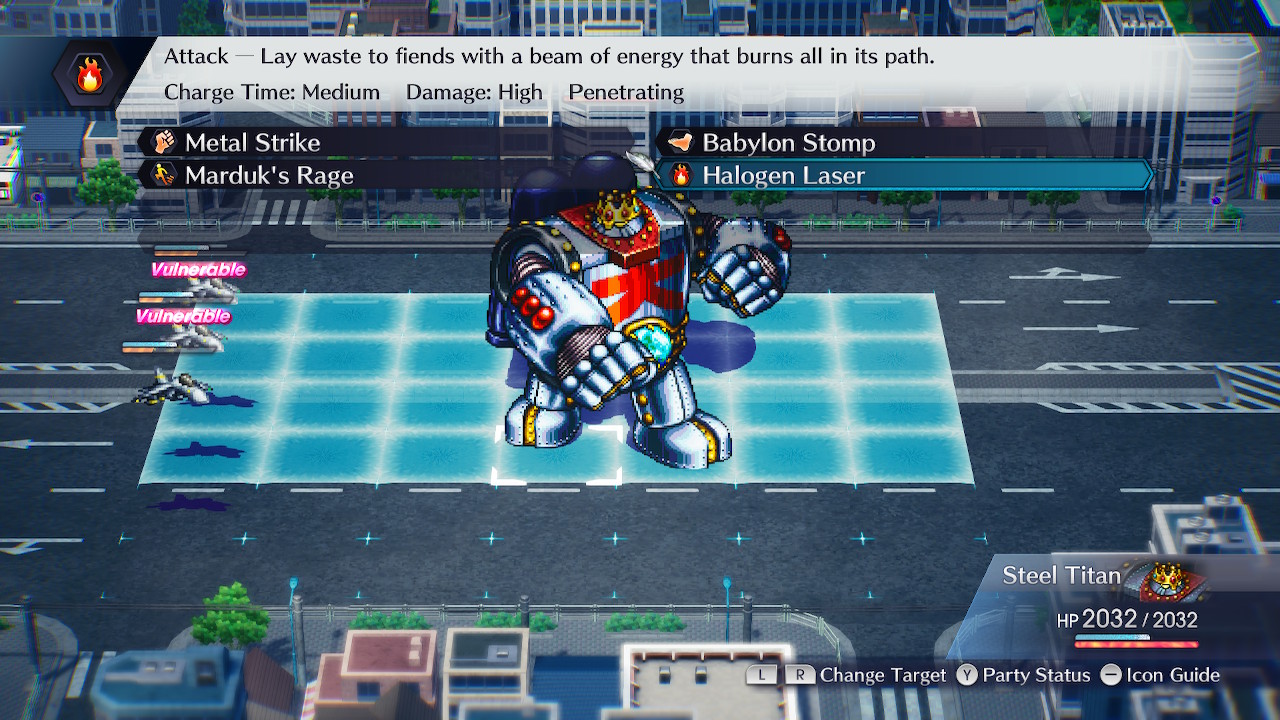
Yep, this was a thing that happened.
Some stories are nice and simple, others are a little more involved. The Prehistory story sees you control a caveboy called Pogo who has to rescue his love interest when she’s kidnapped by a rival tribe and ends with you fighting the T-Rex “dinosaur God” they called Odo. Imperial China has you play as an aging master called “Shifu of the Earthern Heart” (which I assume is more a title than a name) and you recruit three young students to teach. As mentioned which ever one you spend more time teaching becomes your successor, though not before you fight a rival dojo led by Ou Di Wan Lee. In the Edo period you control Oboromaru as he infiltrates the castle of Daimyo Ode Iou in order to rescue the captured Ryoma Sakamoto. In the Wild West you control “The Sundown Kid” and join forces with rival bounty hunter Mad Dog when a group of bandits called the “Crazy Bunch” plan to attack the town you’re staying in and you decide to help. The bandits are led by O. Dio… you’re probably getting the idea now, but I’ll keep typing the villain names regardless…
In the Present Day you play as Masaru Takahara, who wishes to be the best fighter in the world so travels around fighting and learning from the best before defeating rogue Odie O’Bright. In the Near Future you play as Akira Tadokoro, an orphan with psychic powers who wants to get revenge on the Crusaders biker gang who killed his father. He hangs out with “cool older guy on a bike” Matsu and eventually they discover a government-funded religious cult that worships a bird God called Odeo and Akira ends up piloting a giant mech to take them down. Finally in the Far Future you play as a maintenance robot called “Cube” (because he’s round shaped, you see…) on a spaceship called the “Cogito Ergo Sum” where a deadly alien has been captured to bring back to Earth for study but as you’d imagine it breaks free and things turn into a full-on Alien homage. That being said it ends up that the ship’s A.I., “OD-10”, is the one behind it all and you have to fight it in a digital space.
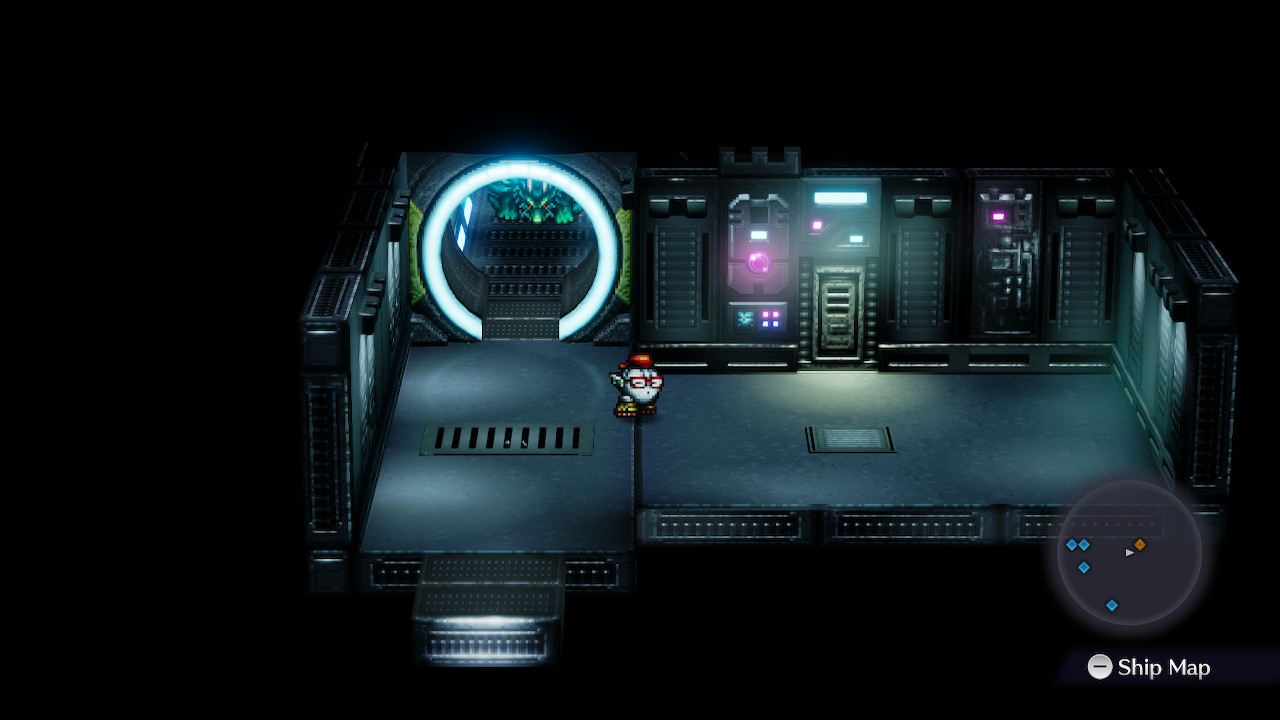
Not the most exciting screenshot… until you look at the entranceway at the top…
That leads to the Middle Ages, where you play as generic hero knight Oersted, who teams up with his friend and mage Streibough and two heroes from yesteryear to defeat the Lord of Dark when Princess Alethea is kidnapped. It all plays out pretty bog-standardly, until towards the end…
Spoilers from here until the next bolded sentence!
After the Lord of Dark is seemingly defeated Streibough is buried in the rubble on the way out and there was no sign of Alethea to boot. Upon returning to the castle Oersted is tricked by an illusion into killing the King and is immediately labelled as the Lord of Dark in disguise and driven out of the Kingdom. Oersted heads back to the Lord of Dark’s castle to find Streibough having been responsible for the deception as he wanted the hand of the Princess and was always jealous of his “friend”. The two do battle and Oersted kills his friend, but Althea arrives and mourns the death of the man who she truly loved and commits suicide to die next to her beloved Streibough. After having lost his love, his best friend and been labelled as evil by all his people Oersted gives in to his anger and hatred and ironically actually becomes the Lord of Dark, dubbing himself Odio.
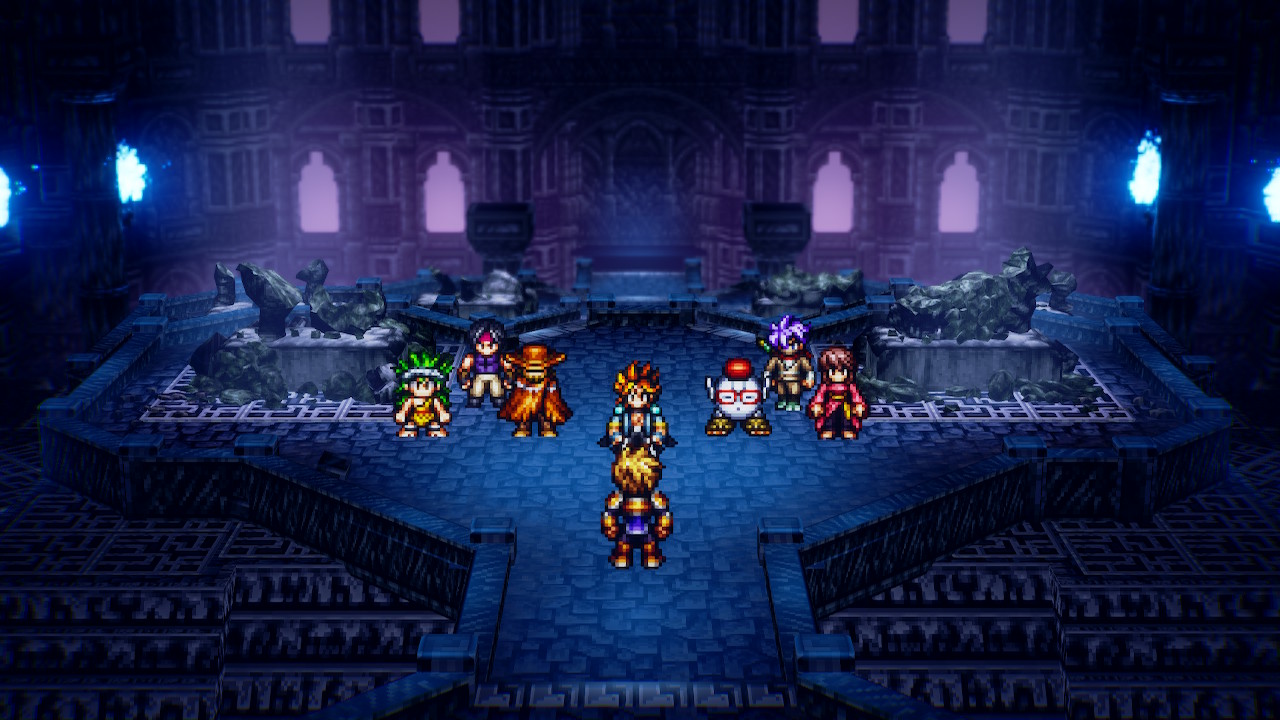
“The Gang’s all here! … to try and kill each other”.
Odio uses his power to influence the past and future (hence why every boss in the previous chapters have some play on “Odio” as their name) and soon brings all the protagonists to his “Dominion of Hate” to show them that their positive outlooks in the face of his various forms were in vain and the darkness is all that exists in the end. There are actually three endings: one if you select to play as Oersted and therefore beat each protagonist and destroy the world in all eras (damn…), one where you kill Oersted after the big boss fight but are therefore trapped in his Domain, and finally the proper ending where after the battle you choice not to kill him, so out of spite he has each protagonist re-fight their Odio incarnation and then himself, only for Oersted to break free of Odio and help defeat the Lord of Dark alongside everyone else. Oersted then sends each protagonist back to their own time with a warning that anyone could become the next Lord of Dark if they give in to hate like he did…
Spoilers End Here!
I think I’d read about the twist with the Middle Ages chapter at some point because as it happened it started to ring a bell, but thankfully it had left my mind enough that it still had the intended impact and made the final chapter really fun.
Thoughts Now:
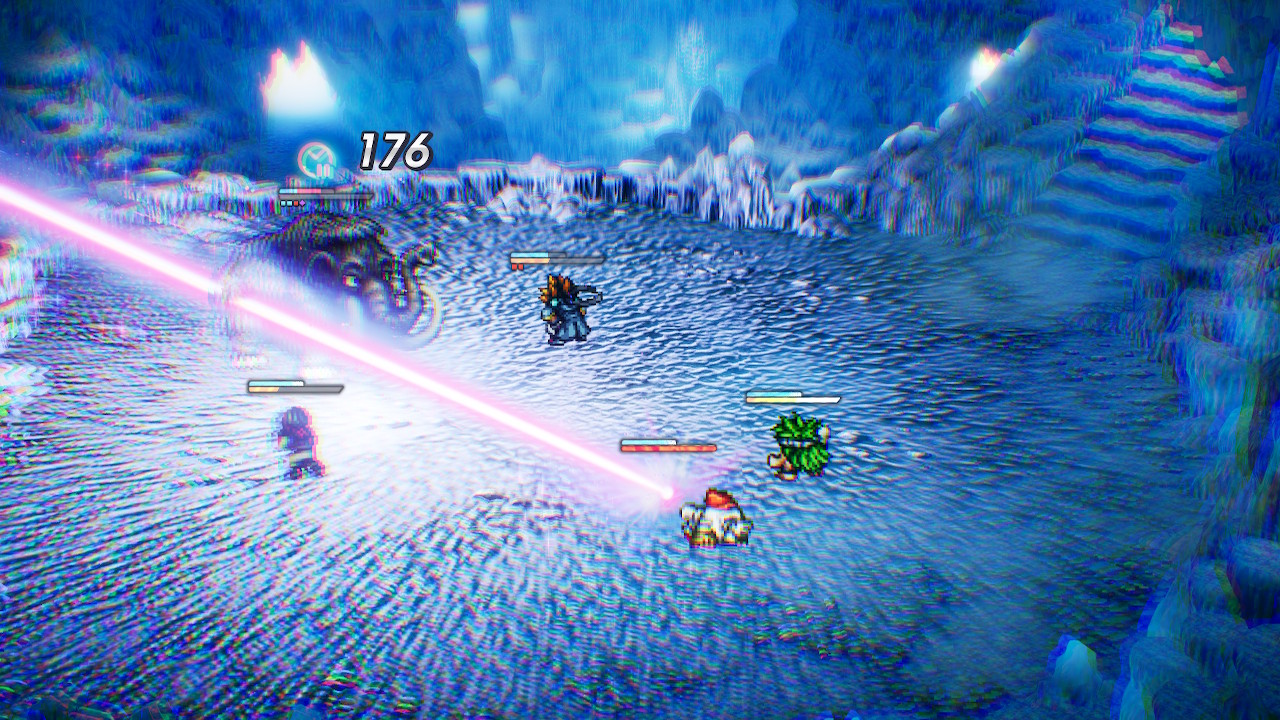
Ever seen a robot fire a laser at a woolly mammoth? Well, you have now!
Live A Live was a good “side game” to dip into here and there, though like all short story collections some I liked more than others. It’s lack of challenge is off-set by some fun stories and characters, though again some chapters are less exciting than others (Present Day being a 1 v 1 fighter with little story but within a JRPG battle system was just weird…) As long as you know you’re not getting a lengthy and deep JRPG experience when you start it you’ll have fun with Live A Live, especially visually and with the standout soundtrack.

 Hogan Reviews