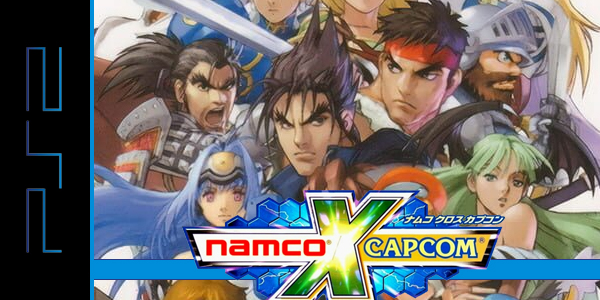
I’ve been wanting to play this for literally decades, sometime after I found the intro movie on the early days of YouTube, but I waited and waited until it became increasingly obvious the game was never going to be localised. Then its two sequels, the Project X Zone games, came out! … on the 3DS, which I didn’t own until just a couple of years ago (and so admittedly I watched a commentary-less play through of both soon after they were released…) Basically I’ve wanted to actually play this trilogy forever and now I have the means to play the X Zone games I also found out about the rough but nonetheless complete fan translation of Namco X Capcom, so I can actually play the whole trilogy! So let’s take a look at Namco X Capcom and see what happened when the Super Robot Wars team made essentially a SRW game but with a tonne of non-mech franchises from two of the biggest gaming companies in the world…
Background:
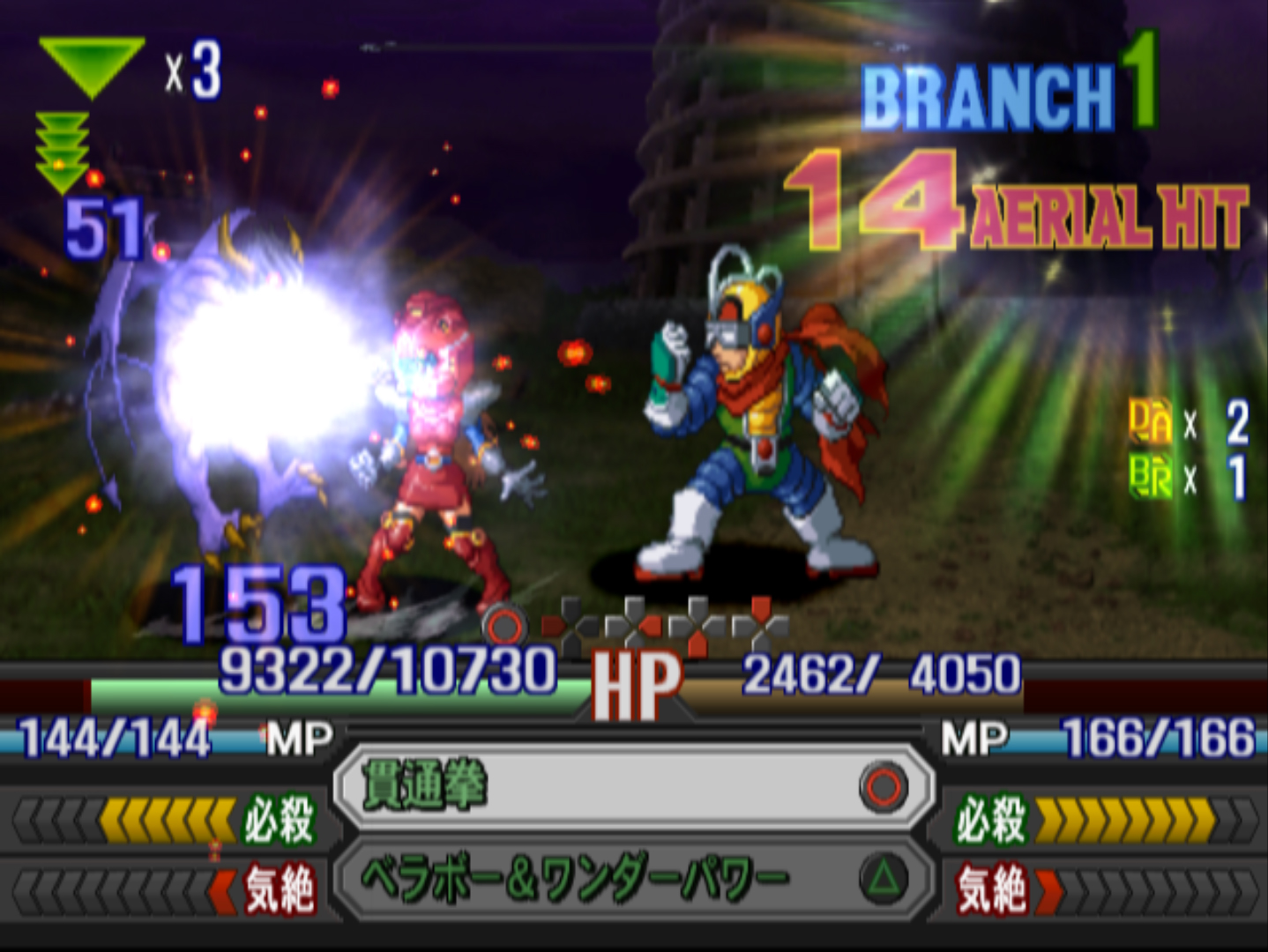
That’s a lot of info on screen, but at the end of the day all I’m doing is pushing one button and the d-pad…
Namco X Capcom was released on May 26th 2005 exclusively in Japan, thanks in part to some of the obscure licenses used but mostly due to the large script and a prediction it wouldn’t make enough money back to justify it, being as 2D tactical RPGs weren’t big in the English-speaking market at the time. I’ll mention it here, the fan translation was created by a group called TransGen and released in 2008, and while yes it’s very rough, a lot of sentences read like bad google translate sentences or the sentences cut off the edge of the text boxes themselves, but given the massive script the fact that any complete translation exists is something of a miracle, and so long as you scan-read you don’t end up noticing the mistakes all that much. I was able to follow along with the story the whole way through, so in my books that’s good enough for such a massive undertaking at a time when fan translations weren’t as big of a thing as they are now.
The game features playable characters from Street Fighter, Tekken, Mega Man Legends, Darkstalkers, Soul Calibur, Tales of Destiny, Captain Commando, XenoSaga, Klonoa, Legend of Valkyrie, Resident Evil: Dead Aim (yeah, that’s right, the not-that-great lightgun game only…), Rival Schools, Dino Crisis, Ghosts ‘n Goblins, Strider, Dig Dug, Tower of Druaga, Final Fight, Bruning Force, Wonder Momo, Genpei Toma Den, Forgotten Worlds, and Bravoman, along with some game-original characters. Obviously some of those are rather obscure to say the least, but a good majority of them are either major hitters or cult favourites, so I don’t really buy the “if you don’t know all the series you won’t get it” thing some tried to justify as to why it didn’t get brought over, especially as every Super Robot Wars game I’ve ever played has included a few series I didn’t know anything about, and finding out about them through the game is always one of the most enjoyable parts.
Gameplay:
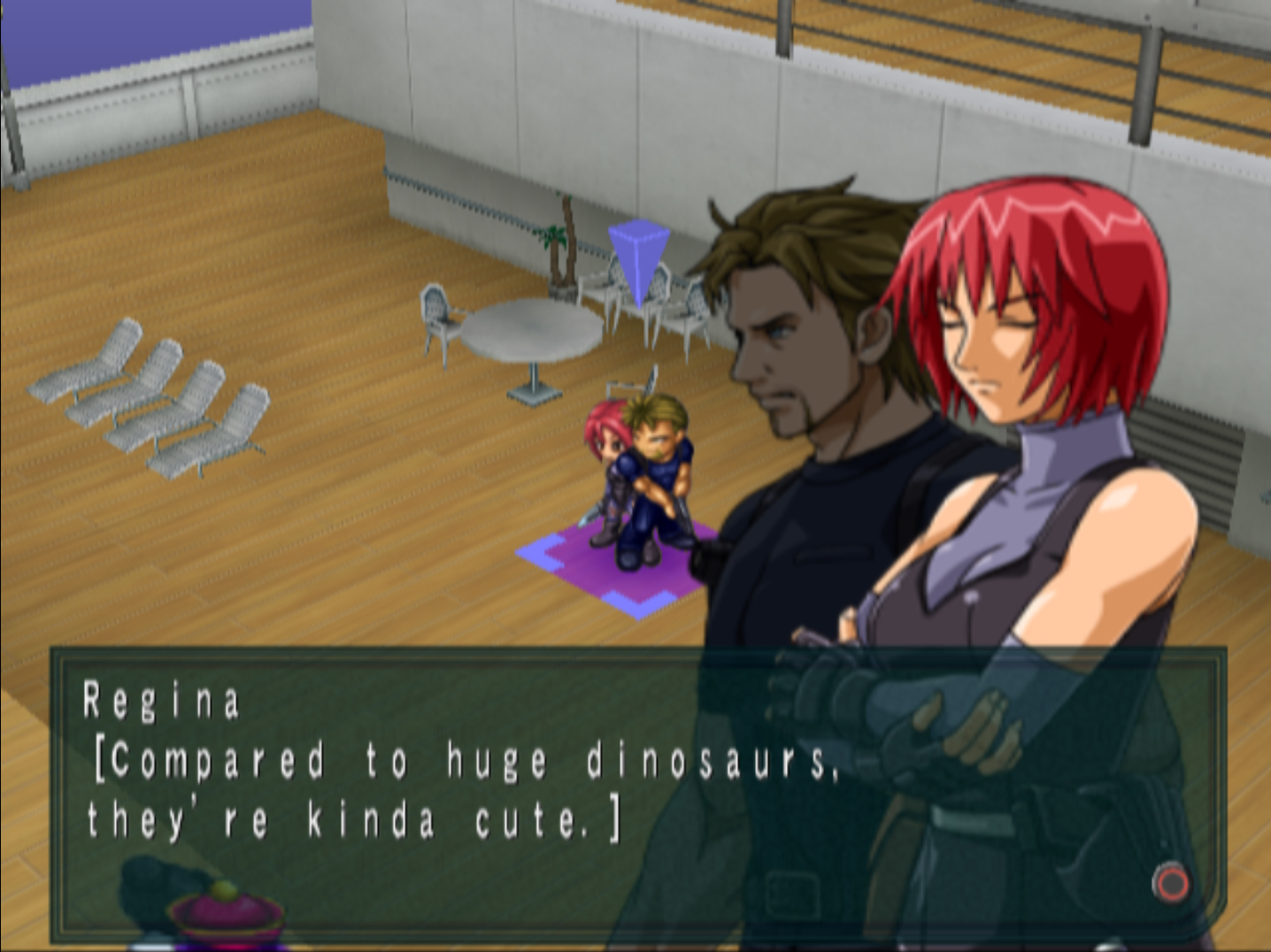
That brief period where Regina from Dino Crisis was considered a relevant Capcom character…
Gameplay visually has a similar set up to Super Robot Wars, though the actual combat part of it is completely different. On the map things are nearly the same: you move your units, which are either a pair (from the same series or in some cases from different ones, which is fun) or a single character, with limited movement spaces depending on their speed, the only difference is instead of taking your turn and then the enemy takes a turn it’s set up so each unit has a place in a turn order and depending on what you do or don’t do you and the enemy characters will move up and down in the turn order based on how many “Action Points” they have. When you’re near an enemy unit or an enemy is in range of a long-range attack you have, you can choose to engage in combat with them. Combat however isn’t you picking a move, watching it happen and then watching a counterattack from the enemy, instead you attack them by manually putting in attacks, O, up-O, down-O, left-O and right-O, if you get all five attacks in you get a reward (varies from unit to unit, but some get a small health or stamina refill, other gets temporary stat boosts) and the longer you juggle your opponent in the air for the more EXP you’ll get, including hitting their lifeless bodies long after you’ve defeated them. When an enemy unit has a turn and they attack you several options appear: you can either take the attack head-on and get a lot more damage but move up a lot in the turn order, block and take less damage but move less in the order, or take a small bit of damage but move down the turn order. In the first two choices you get to reduce the damage by doing a timing minigame when you press each of the four d-pad directions in time to the icon on the screen flashing, which was tricky at first until I realised that there’s a little dot that appears just before it lights up, telling you where to get ready to press. It’s only up for a fraction of a second but it’s enough to better get the timing down. In both attack and defence scenarios a counter at the top right will tell you how many actions the attacking side can take, which can go up if you get a long enough combo going.
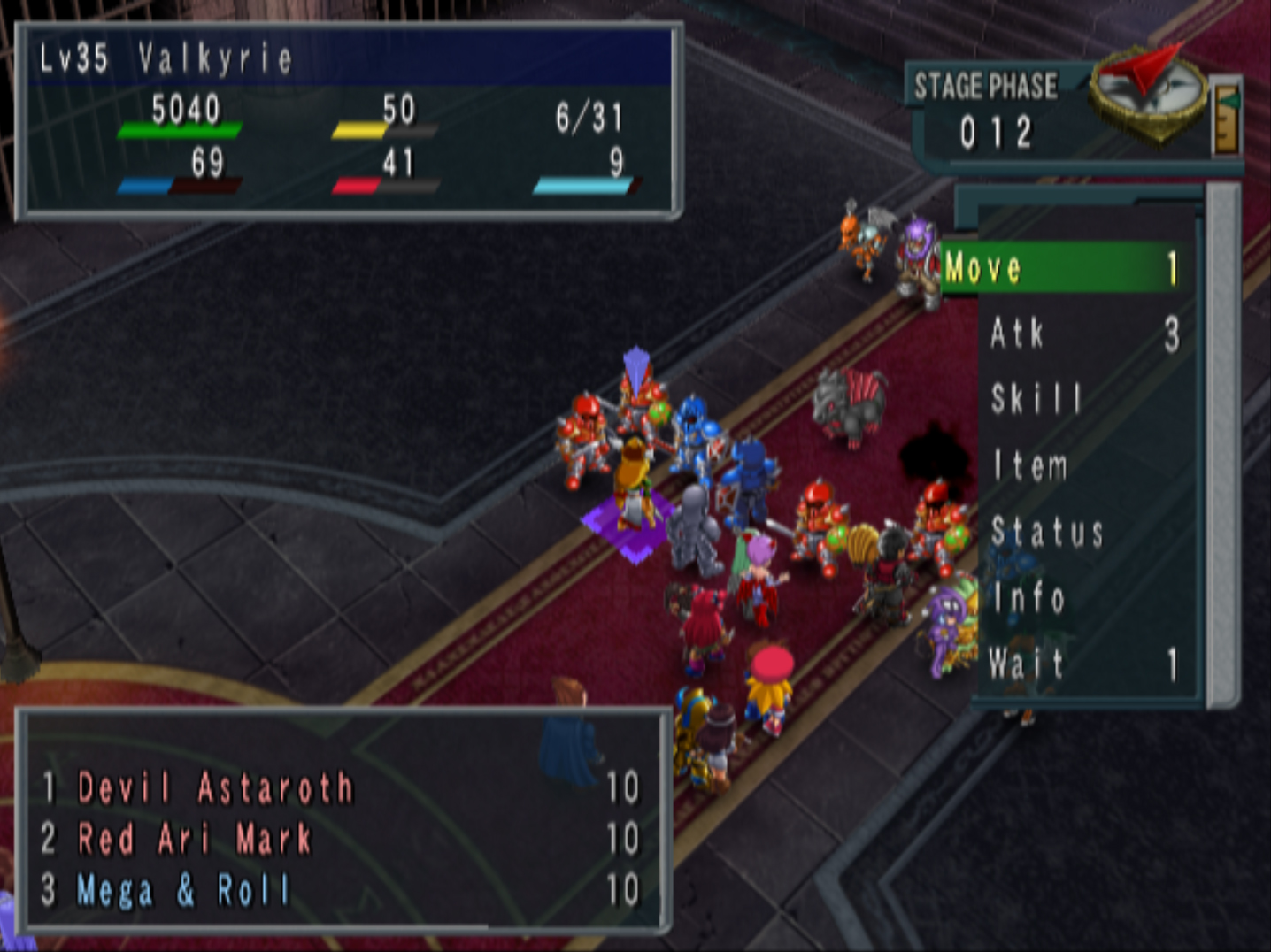
In the middle of a scrum with classic character “Red Ari Mark”…
Along with a health bar you also have stamina bar that if it runs out your character will be stuck in place for a good while and unable to do any blocking at all if hit, and a special meter that if you max out you can, unsurprisingly, do your special attack for some major damage. Some units have the ability to “counterattack” when the enemy picks them, allowing you to damage them instead of getting hit, but this either takes away special meter or Action Points, so it’s not always worth it (but honestly? It almost always is…) Also some units have a “Multi-Assault” move they can do where them on their own or two sets of units (two pairs or a pair and a single) team up to do a big attack to either multiple enemies or deal a lot of damage to just one enemy. They’re entirely cutscene so involving no input from the player. You can buy or gather items from fallen enemies, and these vary from health restoratives, AP and special restoratives, or cures for status effects like the good old fashioned Poison status. They actually make the game quite a lot easier, especially when I realised you can take them in the menu when you’re about to be attacked, so if you’ve forgotten to heal a unit and they’re about to be attacked and killed you can heal them with an item they have there and then and avoid death. It made the game 100x easier when I figured that out! Each unit has a limited but generous amount of space to hold these items and can also equip a couple of special items that can give permanent stat boosts and the like. Winning 99% of the time comes from defeating all enemies and loss from the defeat of one or two specific storyline relevant units on your side (No Fire Emblem perma-death here for the record, thankfully!) with possibly one or two “stop the enemy from reaching this part of the map” success/failure stipulations thrown in.
That’s about it, really. The game is split into a couple of prologues and a whole tonne of levels, and some of them go on a LONG time, especially as unlike in SRW you can’t skip battle animations to speed through longer levels because they you’ll miss out on the timing stuff to get more AP and reduce damage, so you have to take part in pretty much every. single. battle. My final completion time was 78 hours and I wonder how shorter that would’ve been with the SRW skip animation option for later encounters. Anyway, all that being said, I did really enjoy the game, mostly due to the crazy crossover and how it was one of the crossovers where they’re written to pretty much all exist in the same world already rather than too much “I’ve arrived from another universe, what’s going on here?!” stuff we often get.
Graphics and Sound:
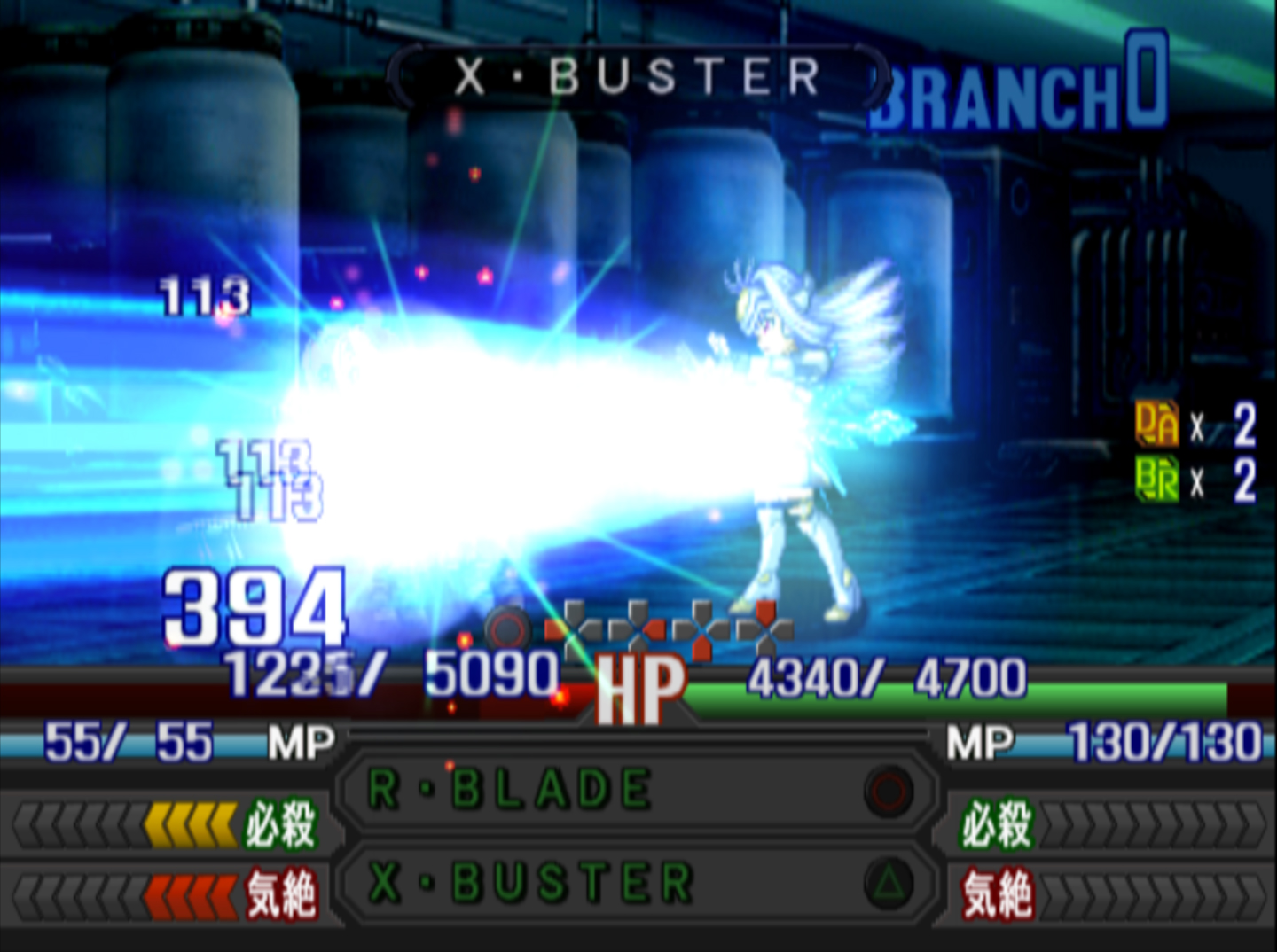
That blast is coming out of her midriff, I’ll have you know…
The graphics are fine, but I can understand some people thinking they look too basic for the PS2 at the time. Nice sprite work during combat, decent but small sprites on the maps and the maps themselves are rudimentary 3D affairs. So while not super impressive given the sheer amount of new sprites they had to make I think they can be forgiven for that. All the dialogue (and boy, there’s a LOT of dialogue!) is done via text boxes and nice newly created artwork, so again you can’t call them lazy, that’s for sure. There’s also a full anime opening to the game as well!
Sound-wise is great, a few original bits of music (the “bad guys are taking a turn” music drove me nuts by the end though…) and lots of classic tunes and remixes for the various series represented, plus the sound effects and voice work are good too (even if most of the voices are for attacks and such, with only a few cut scenes voiced).
Story:
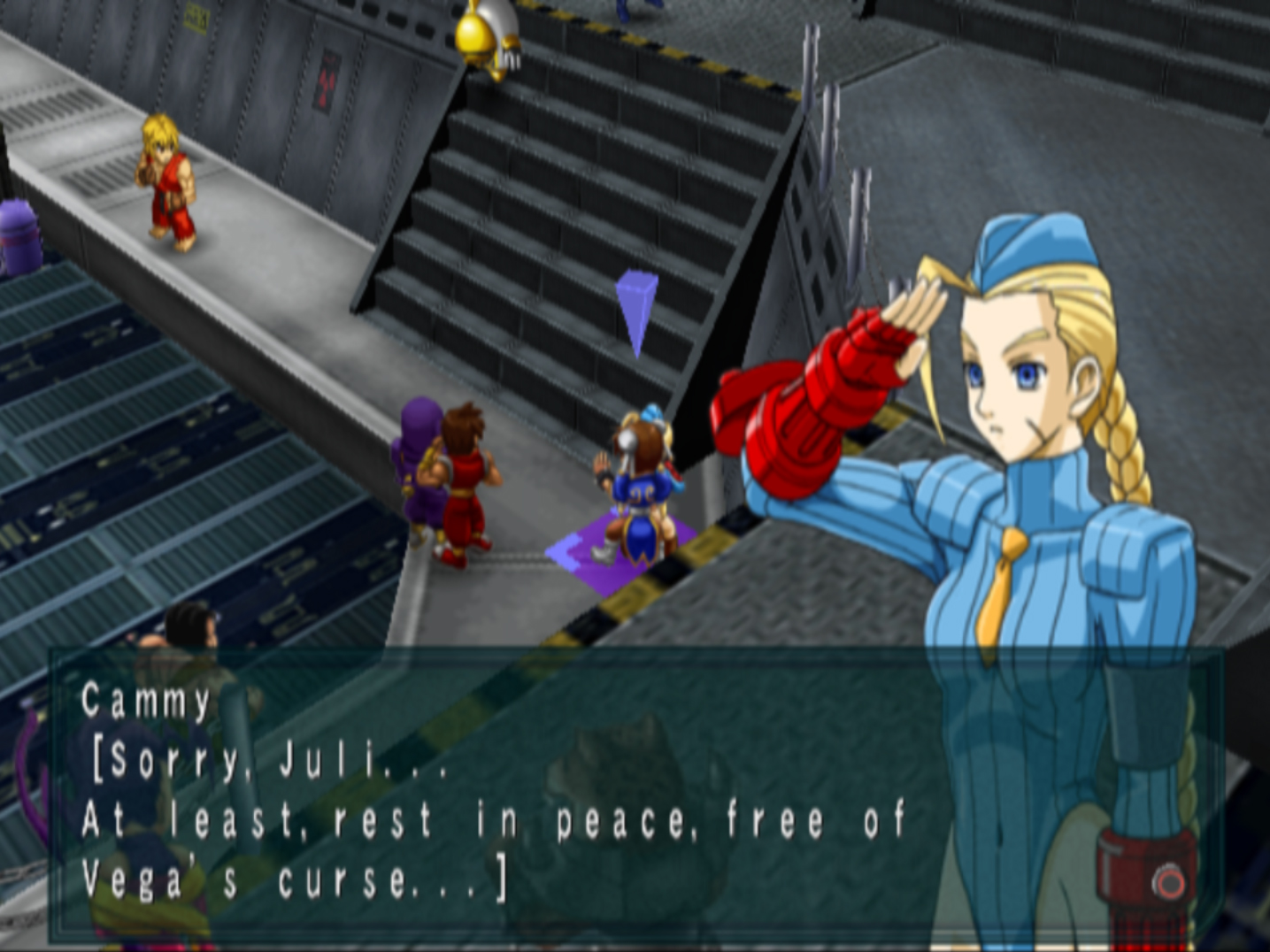
The name choices from the fan translators are odd as well, they call M. Bison “Vega” like in Japan but change Gouki to his English name of Akuma. Go figure…
Much like the Super Robot Wars series the storyline is a mix of an original overarching story and some of the individual stories from a lot of the series, like Street Fighter Alpha stuff with Ryu dealing with Akuma and the Dark Hado while M. Bison with Cammy, Juli and Juni is running around, Morrigan finding her other half Lilith, Mega Man Volnutt and co dealing with a restored version of Mega Man Juno, Jin finding out his father Kazuya is alive, Taki and Mitsurugi being on the hunt for Soul Edge, Klonoa and Guntz dealing with the double bill of Joker (not that Joker… or that one!) and some overly sweary cat guy in a trenchcoat, and Stahn and Rutee from Tales of Destiny deal with the bad guy resurrected version of their friend who now goes by the name Judas from Destiny 2 (I have zero frame of reference for the last two, for the record…) plus Strider, Ghouls and Ghosts, Valkyrie, Bravoman, Wonder Momo, Genpei Toma Den, and Tower of Druaga all have “our previously defeated final boss and some enemies thought wiped out have suddenly come back to life!” storylines that merge together. The Captain Commando characters, XenoSaga characters, other Darkstalkers and Tekken characters, the Forgotten Worlds soldiers, Haggar and Guy from Final Fight, Taizo Hori (Dig Dug), Bruce McGivern (RE Dead Aim) and Regina (Dino Crisis) all have locations and an enemy or two from their series but not much else story-wise.
As for the original plot? It centres around two agents of Shinra (not that one…) a company that deals with interdimensional threats to Earth, called Reiji Arisu and Xiaomu. Xiaomu is a veteran magic foxgirl-God… thing (who still looks and acts really young and immature) while Reiji is still mentally recovering from seeing his father killed by cat girl Saya a few years prior to the game starting. You’ll be unsurprised to hear that Saya and her Ouma group then make an appearance in the present and are the main (original) antagonists of the game, often teaming up with other major already existing villains while trying to get their hands on the Soul Edge to use its power to cross dimensions in order to restore their leader, the all-powerful “Kyuju-Kyu” or literally just “99”. In doing so they causes several dimensions to merge, allowing all the crossover (though as previously mentioned, happily most Earth-based series are written to be on the same Earth and aware of each other’s characters/organisations, which limits the “what world is this?!” dialogue a lot)
Spoilers in the next few sentences!
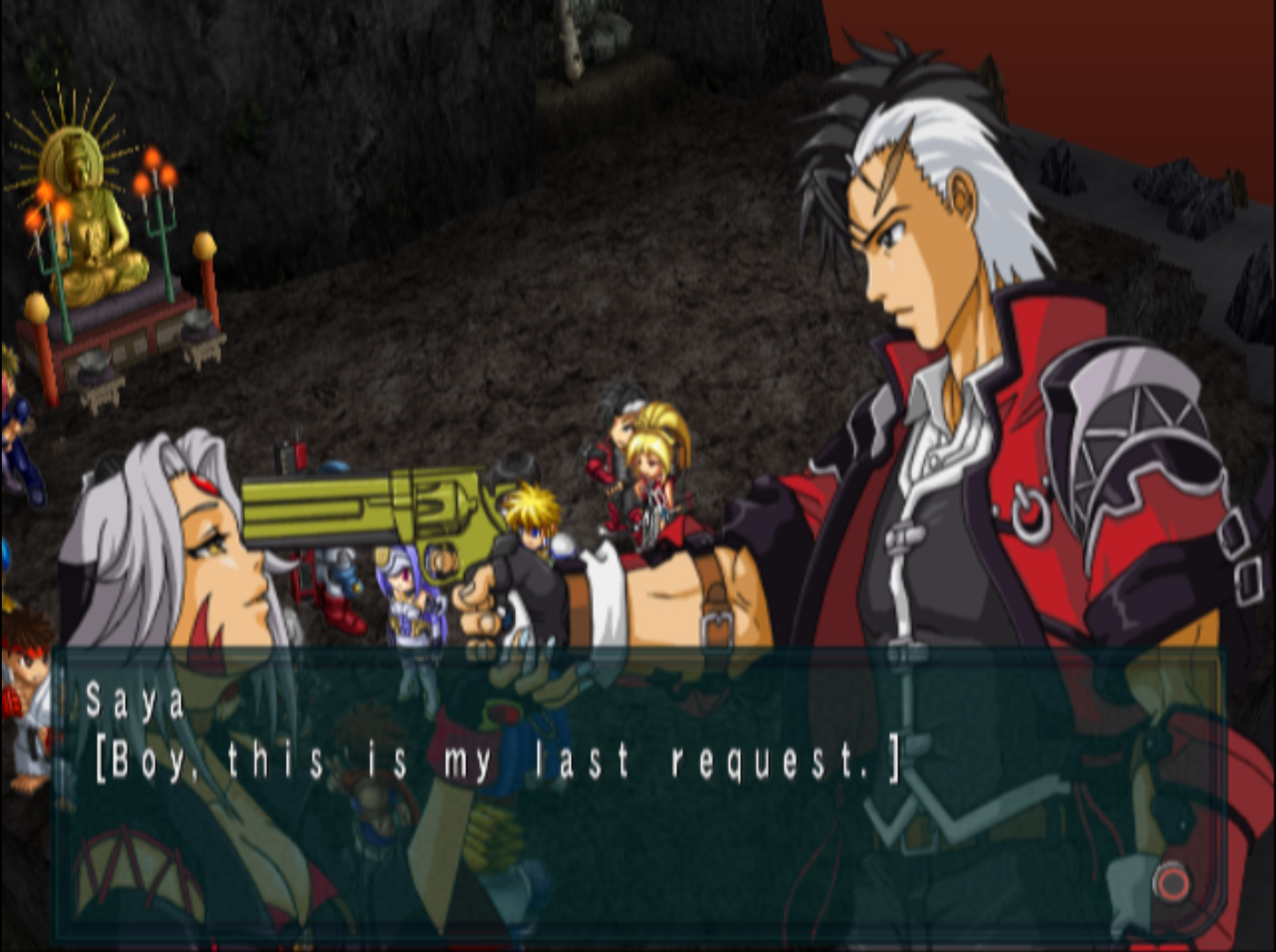
A dramatic final showdown! … Well, I say final…
While Ryu turns Evil Ryu for a spell before regaining himself, Jin goes through a similar but shorter experience with his inner demon as he faces off with Kazuya (and meets his granddad Heihachi) and everyone else deals with either their resurrected enemy or just sort of… hangs about, Saya does in fact restore 99 to life, but at the cost of it possessing her body. When Reiji and Xiaomu reach 99 and defeat it Saya remarks how Reiji having a gun to her head is reminiscent of when she killed his father, and takes her death as a fitting end (note, all these characters reappear in the two X Zone games…) With the group behind the dimensional disturbances dealt with the non-Earth characters and future characters return to their lands/time periods, and all the present day Earthlings similarly return to Earth.
Spoilers are now over!
I’m kind of fed up of saying “much like Super Robot Wars”, but much like that the story is wordy but it’s really fun to see all these separate characters meet and interact, and see the different enemies / bosses reappear as enemies in this type of game.
Thoughts Now:
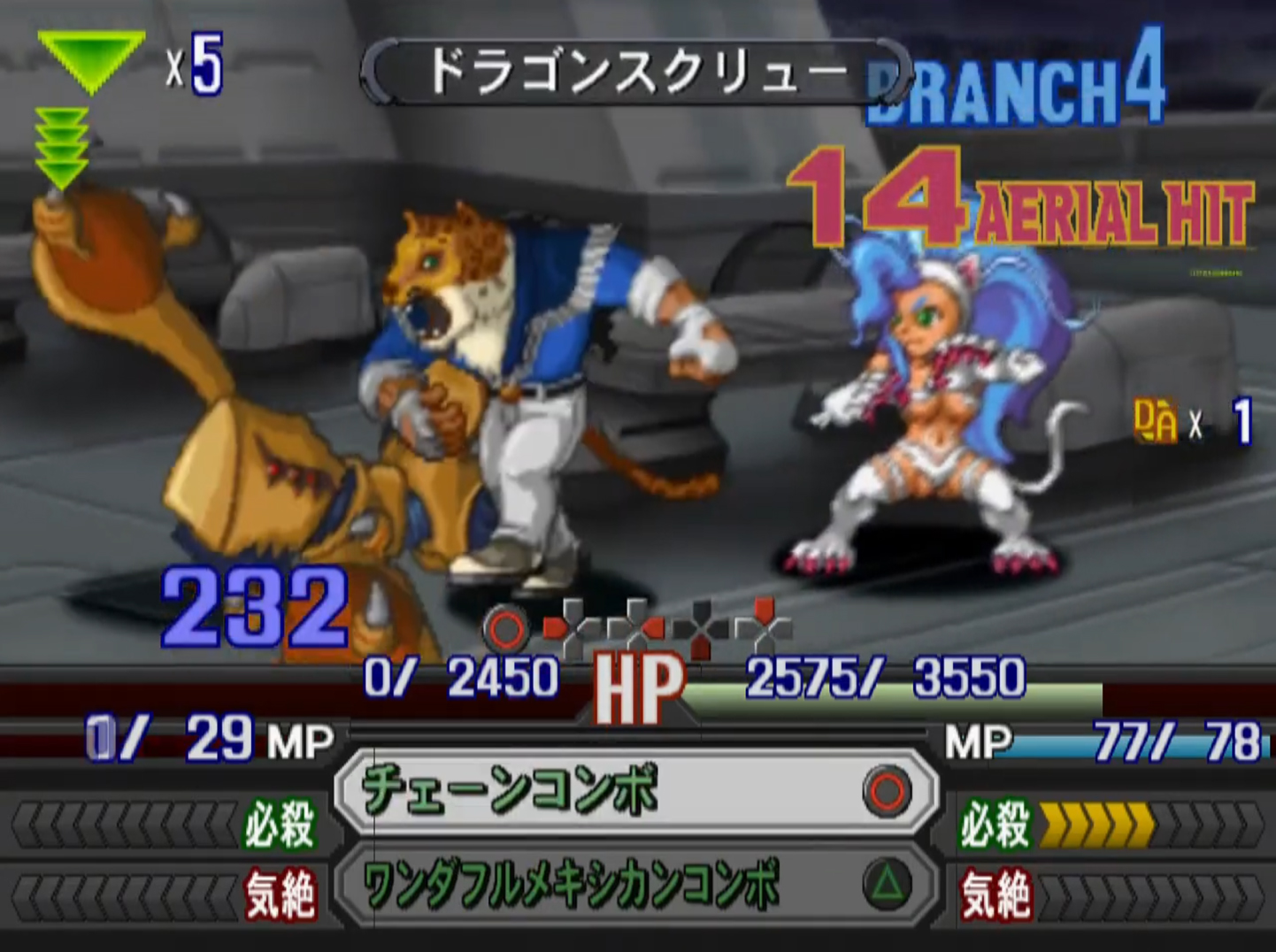
Getting King to hit the Dragon Screw on odd looking enemies, especially ones without legs to even grab, was always good fun.
I enjoyed my time with Namco X Capcom. Admittedly I took a few breaks because it does get a bit samey if you play it too much for too long given you can’t skip basic encounters without potential penalties and all that (plus having to plug my PC into my TV can be a pain if I’m looking for a quick go on a game) Still, the crazy crossover stories and maps/enemies kept me coming back for more until I reached the end. Looking forward to playing through the X Zone games at last but I’ll be waiting for a while until I start to avoid completely burning out on the button-pressing encounters…

 Hogan Reviews